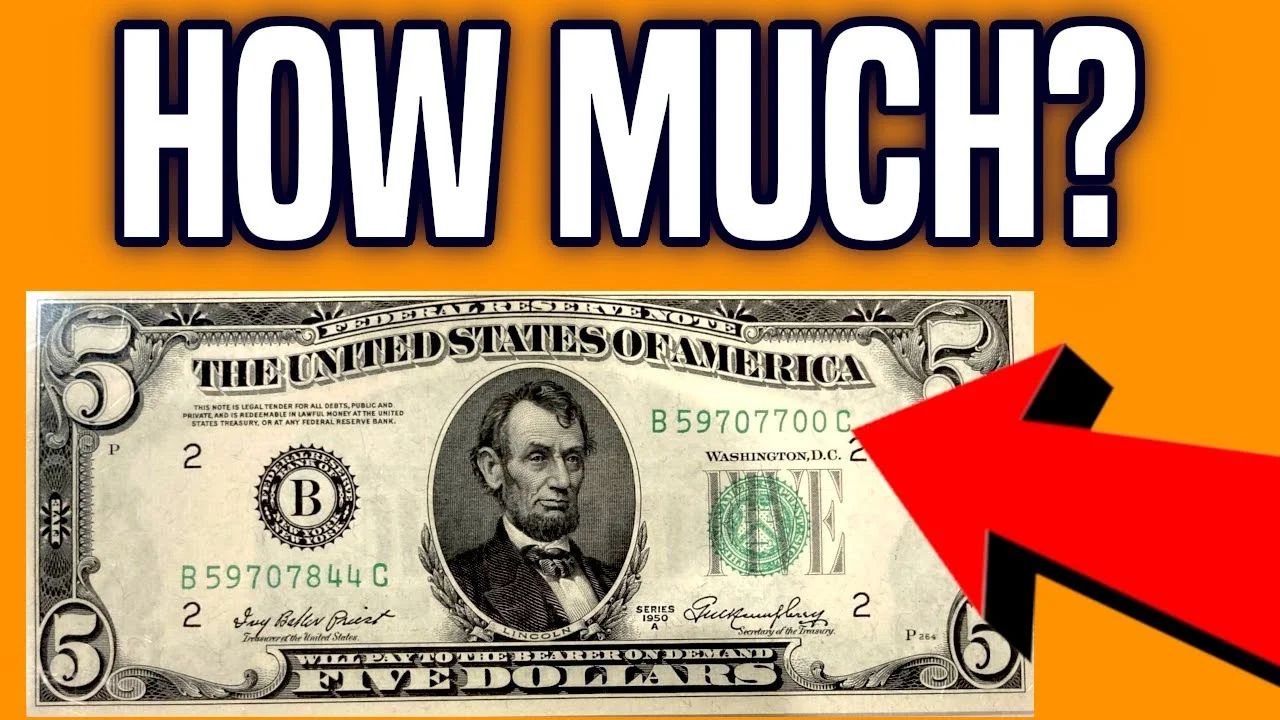
Most people use cash every day without a second glance. Bills are folded into wallets, exchanged at counters, and forgotten as soon as the transaction ends. Yet, occasionally, an ordinary banknote carries a detail that makes it far more interesting than its face value. One such example is the 1995 $5 bill with an upside-down seal, a genuine printing error that has drawn attention from collectors and everyday holders alike.
If you have ever wondered whether the money in your pocket could be worth more than you think, understanding this specific error is a smart place to start.
Why Currency Errors Matter

Currency errors exist because even the most advanced printing systems are not entirely immune to mistakes. U.S. banknotes are produced using complex, multi-stage printing processes with strict quality control. Despite this, a small number of flawed notes occasionally pass inspection and enter circulation.
What makes these errors valuable is not just rarity, but visibility. Collectors are drawn to mistakes that are easy to identify and clearly different from standard designs. An upside-down seal is visually striking and unmistakable once you know what to look for. These characteristics make error notes especially appealing in the collectible currency market.
Understanding the Design of a 1995 $5 Bill
Before identifying an error, it is important to know what a normal 1995 $5 bill should look like. On the front, the portrait of Abraham Lincoln is positioned slightly to the right of center. To the left of the portrait is the green U.S. Treasury seal, and to the right is the black Federal Reserve seal.

Both seals are meant to appear upright and correctly aligned with the portrait and surrounding text. The serial numbers, borders, and lettering all follow a consistent orientation. Any major deviation from this layout, particularly involving the seals, is a strong indicator that something is unusual.
How an Upside-Down Seal Is Created
An upside-down seal occurs during the printing process rather than after the bill enters circulation. Currency is printed in layers, with different elements added in separate stages. The seals and serial numbers are applied later in production using dedicated printing plates.
If one of these plates is incorrectly aligned or rotated during printing, the seal can appear upside down while the rest of the bill remains perfectly normal. Because such errors are typically caught during inspection, only a small number reach circulation. This scarcity is a major reason why inverted seal notes attract collector interest.
How to Identify a 1995 $5 Bill With an Upside-Down Seal

Identifying this error does not require special tools, only careful observation.
First, check the series year printed on the front of the bill. Look for “Series 1995.” While other years may also contain errors, this particular inverted seal variety is most commonly associated with the 1995 issue.
Next, focus on the green Treasury seal to the left of Lincoln’s portrait. On an inverted seal note, the scales and key inside the seal will be upside down in relation to the portrait and text. This is not a slight tilt or printing blur but a full 180-degree rotation.
Comparing your bill with a standard $5 note can make the difference clearer. When placed side by side, the incorrect orientation becomes immediately obvious.
Finally, evaluate the overall condition of the bill. Collectors prefer notes with clean surfaces, strong ink, and minimal creasing. A well-preserved example will always be more desirable than one that is heavily worn.
Is a 1995 Upside-Down Seal $5 Bill Valuable?
The value of an error note depends on several factors, including condition, demand, and how dramatic the error appears. In many cases, a genuine 1995 $5 bill with an upside-down seal is worth more than its face value.
Even circulated examples can attract interest, while uncirculated or near-perfect notes often command significantly higher prices. That said, values are not fixed. Market demand changes over time, and prices can fluctuate depending on collector interest.
It is also important to distinguish major errors from minor imperfections. Ink smears, small misalignments, or faded areas are relatively common and usually carry little premium. A true inverted seal, however, is widely recognized as a legitimate and collectible error.
What to Do If You Find One
If you believe you have found a 1995 $5 bill with an upside-down seal, resist the urge to spend it. Handle the note carefully and place it in a protective sleeve or envelope to prevent further wear. Keep it flat and away from moisture, heat, and direct sunlight.
For those considering selling or insuring the note, professional authentication is strongly recommended. A reputable currency dealer or third-party grading service can confirm whether the error is genuine. Authentication not only protects you from misidentification but can also enhance the note’s market value.
Even if you choose not to sell, owning a verified error note can be personally rewarding.
Why These Bills Continue to Fascinate Collectors
Currency errors occupy a unique position between everyday money and collectible artifacts. They are unintentional, limited in number, and impossible to replicate exactly. Each one represents a brief breakdown in an otherwise precise system.
The 1995 $5 bill with an upside-down seal is a perfect example of how a small mistake can transform an ordinary object into something rare and memorable. Its appeal lies in its simplicity, visibility, and the story it tells.
Final Thoughts
The idea that a simple printing error can turn a common banknote into a collector’s item is what makes currency errors so compelling. The 1995 $5 bill with an upside-down seal reminds us that value is not always obvious at first glance.
The next time you take cash out of your wallet, pause for a moment and look closely. That seemingly ordinary bill might be hiding a detail that makes it far more special than you ever imagined.